
The Psychology of "Flavor Parity"
After launching “Death Dust,” Liquid Death realized the flavor profile didn’t hit the mark. But instead of burying the feedback, Liquid Death...
Admitted the mistake immediately.
Fire-sold the remaining stock.
Committed to a total relaunch in just 60 days.
It's a move that every CPG brand should study...BUT not for the reason you're thinking!
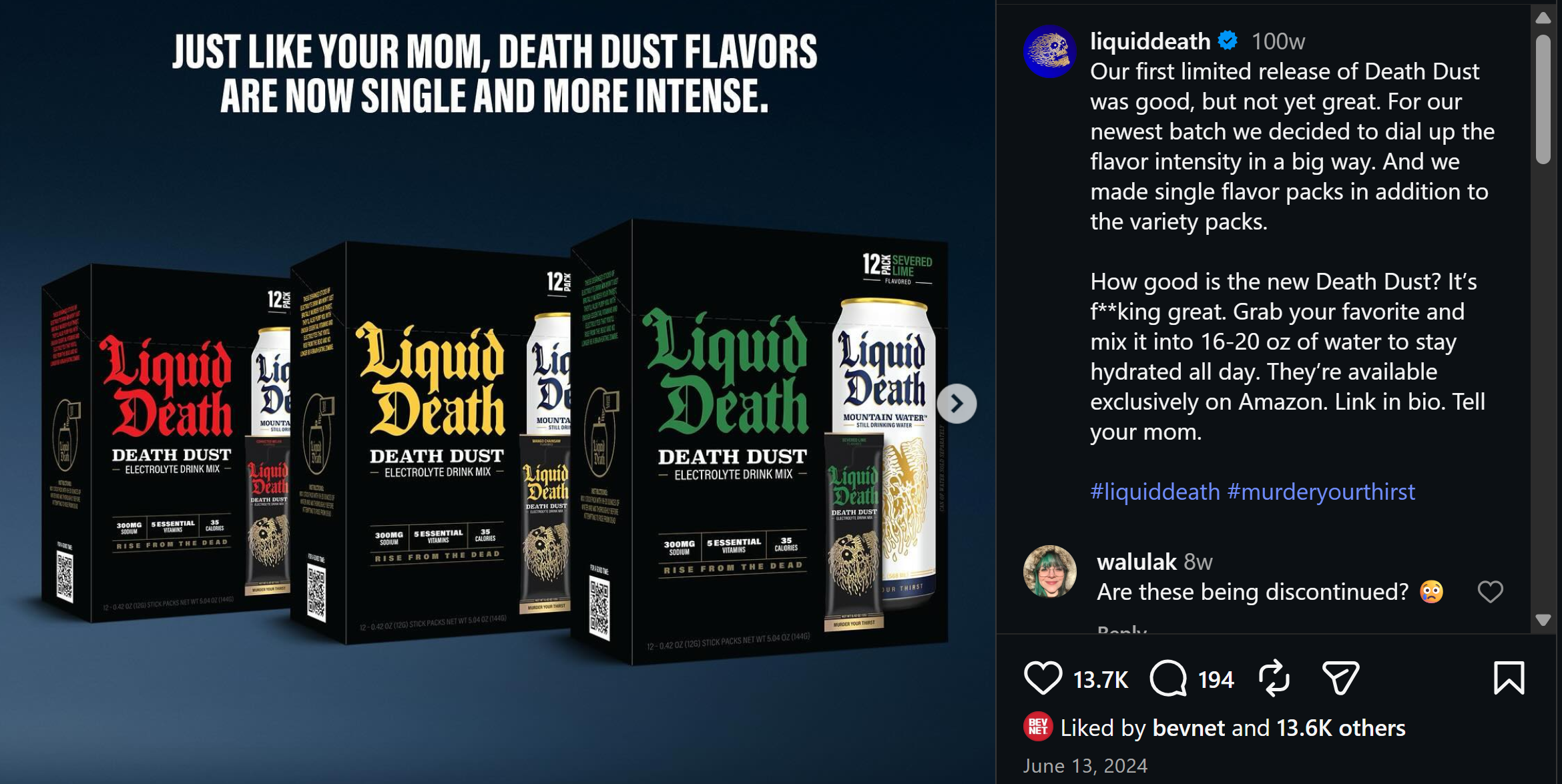
Liquid Death leaned on "Flavor Parity," which is the strategic decision to utilize "Master Flavor" names across different product formats. But it's a double-edged sword...
✅ Instant trust and high initial trial from existing fans.
❌ If the flavor doesn't match the "OG" version, it can create a "negative halo effect," where the consumer begins to doubt the original product they once loved.
Oftentimes overlooked...CPG brands sign psychological contracts with customers when it intentionally uses a "Master Flavor" across different product formats. In fact, when Liquid Death leveraged names like "Severed Lime" for both sparkling water and the powdered hydration sticks...they were setting a specific sensory expectation.
Schema Effect
In marketing psychology, a "schema" is a mental framework that helps us organize information. When a customer sees "Mango Chainsaw" on a hydration stick, their brain automatically retrieves the exact sweetness, acidity, and carbonation levels of the sparkling water. If the powder lacks that specific acidity or signature tang, it triggers cognitive dissonance, leading to a perception of "lower quality" even if the flavor itself is objectively fine.
"Intensity" Problem
Consumers often perceive flavored sparkling waters as having a "light" profile. In contrast, hydration supplement powders are expected to be more functional and intense. Managing this intensity gap while keeping the flavor profile recognizable is the hardest part of cross-category extensions.
Linguistic Precision
The term "lime" is vague, but "Severed Lime" is a specific brand asset. Sensory science shows that as descriptors become more specific, the consumer's certainty of what they should taste increases. Thus, Liquid Death faced a promise-to-product gap.
"Beyond Flavor" Strategic Business Lesson
By moving fast, Liquid Death prevented the "bad flavor" schema from becoming a permanent part of their brand's mental node. They essentially hit "undo" on a brand promise before it could permanently erode their core water sales.
"Perfect" is the enemy of "Fast." And the strategic decision by Liquid Death to discount and relaunch in 60 days shows that agility is the best defense against a brand-diluting extension.
Final Thoughts
While it appears Liquid Death ultimately decided to discontinue "Death Dust" in 2026, the strategic lessons (especially those regarding the psychology of flavor parity) remain solid.
Also, it reminded me of something I mentioned at the very end of my April 2024 content piece about this Liquid Death brand extension...
"Mike Cessario is moving into my world now, and while I agree that there’s 'little-to-no comedy-centric brands' in hydration supplements, I think the notion that this these brands only market to health nuts would overlook what’s happened over the last handful of years. Does that mean there isn’t space for Liquid Death to target more of those 'beer drinking and junk food eating' consumers, and turn them into hydration supplement category lovers too? No. But I’d argue the ocean might not be as blue as the pantone used on the Armless Palmer tea flavor."